
Structural Innovation: The Guide to Custom Hinges, Compartments, and Complex Tin Tooling
🔑 Introduction: Engineering Your Competitive Edge
When standard shapes fail to meet your product's needs, structural innovation in tin packaging becomes your competitive advantage. Designing unique hinges, multiple compartments, or complex silhouettes requires deep technical expertise and investment in specialized tooling.
Here is the direct answer: Structural innovation requires moving from standard slip lids to custom tooling for features like hinged lids and tiered compartments. While custom tooling offers unmatched design freedom, it necessitates a significant upfront investment (often 5-10 times that of standard tooling) and adds several weeks to the development timeline. The long-term ROI is secured through high-volume production and mold ownership.
Part I: Functionality – Hinges and Security
Q1. What are the common hinge types for tin boxes and their durability?
The direct answer: Functional tin structures rely on hinges that range from simple rolled-edge designs to complex plastic components, with the most durable and aesthetically pleasing options requiring specialized tooling and precise assembly.
Standard Rolled Edge Hinges: The most common type. The back of the tin body has two holes. The metal edge is rolled and crimped over a pin or a formed metal tongue. They are durable for regular use.
Metal Wire Hinges: A common type where the lid's back edge is crimped, and the body has two holes, connected by a metal wire. Key Consideration: This method often requires intensive manual assembly, significantly contributing to the final labor cost.
Rivet Hinges: A less common, high-security method where the lid has a long rectangular hole and the body has two round holes. The parts are assembled using folded ear tabs and two rivets. Key Consideration: This method is highly labor-intensive for assembly.
Plastic Hinges: Used primarily on smaller tins (e.g., cigarette cases). A plastic connector attaches the lid and body. Key Consideration: Offers a different aesthetic and closure feel but is typically limited to smaller structures.
Q2. How is maximum security achieved for high-value items?
The direct answer: Maximum security moves beyond standard rolled-edge structures to involve engineered friction, mechanical locking points, and advanced Anti-counterfeiting Printing Technology for ultimate product integrity protection.
1. Engineered Sealing Structures
Deep-Drawn Friction Plugs: To achieve relative airtightness (common in coffee or powdered goods), a two-piece lid includes a deep-drawn inner plug lid. This plug frictionally embeds into the tin body, creating a tighter, more secure seal than a standard slip lid.
Screw Lid (Spiral Sealing): For products requiring enhanced sealing (e.g., milk powder, matcha, coffee powder), the lid is designed with a screw mechanism (like a thermos flask).
Features: This often includes an aluminum tear-off seal or easy-open end at the mouth, internal silicone or rubber sealing rings for a secondary seal, and welding the tin body seam for absolute airtightness.
2. Advanced Anti-Counterfeiting Printing Technology
The ultimate layer of security is covert and overt printing designed to defeat illicit duplication. We integrate visible features for consumer trust with hidden methods for brand protection:
Microtext Security: Involves printing text so small (often at the micron level) that it is invisible to the naked eye. This requires industrial-grade precision printing plates. Counterfeit attempts using standard digital processes result in smeared or blurred lines, immediately exposing the fake.
UV Fluorescent Ink (Covert Security): This invisible ink remains undetectable under normal light. It is activated only under UV-A light (easily verified with a cheap UV pen), revealing hidden logos, batch numbers, or unique verification stamps. This is a crucial covert layer.
Variable Data Serialization (Track & Trace): Each tin receives a unique digital identifier (QR code, barcode, or alphanumeric serial number) during the manufacturing run. This enables consumers to verify authenticity via a smartphone app and allows the brand to track the product's entire lifecycle and identify specific points of diversion in the supply chain.
Part II: Complexity – Shapes and Tooling
Q3. What are the structural options for multi-product packaging (Compartments)?
The direct answer: Multi-product tins require internal compartmentalization, achievable through two primary methods, each impacting cost and quality:
Plastic Trays (PVC/PET):
Pros: Lowest cost, versatile, customizable to fit complex product shapes, and requires no modification to the tin's core tooling.
Cons: Less eco-friendly and does not offer the same premium feel as metal.
Tin Dividers:
Pros: Creates a highly durable, premium presentation that matches the exterior metal.
Cons: Significantly increases cost and complexity as each divider requires its own die-cut and specialized soldering or crimping assembly process.
Q4. What are the cost and timeline differences between standard vs. custom shaped tins?
The direct answer: Moving from standard shapes (round, square, rectangle) to custom or irregular shapes requires a substantial commitment to new tooling, which is the primary driver of initial cost and timeline extension.
Standard Shapes (Round, Square):
Tooling Type: Existing or modular tooling (minimal customization).
Tooling Cost: Generally lower, often requiring only minor adjustments or partial molds.
Development Time: Shortest lead time for development.
Custom Shapes (Heart, Car, Irregular):
Tooling Type: Dedicated Full Tooling (specific to your design).
Tooling Cost: Requires full new die-sets, typically 5 to 10 times the cost of standard adjustments.
Development Time: Adds 4 to 6 weeks to the pre-production development process for testing and refinement.
Q5. How does designing a double-layered or tiered tin impact the structure?
The direct answer: Double-layered or tiered tins are high-end structures often used for confectionery or premium gift presentations. The complexity drastically increases because the structure requires not just one, but two sets of precisely aligned body and base molds.
The inner tier's base and the outer tin's top must fit perfectly to create a clean separation. This dual-structure design significantly raises:
Tooling Investment: Requires the creation of multiple distinct dies.
Assembly Complexity: Assembly time is longer due to the required precision stacking and fitting of the inner layer.
Q6. What are the key design considerations for adding handles or unique components?
The direct answer: Integrating handles, coin slots, or other components demands careful structural engineering to ensure the metal does not fail under load or stress.
Handle Reinforcement: Handles require specific reinforcement points or thicker metal where they attach to the tin body. Without this, the metal can easily tear or deform when the handle is lifted under weight.
Accessory Integration: Any added accessory (like a hinge pin or a latch component) must be designed to withstand repetitive stress. This often means designing the die to include extra rolled edges or crimped tabs to secure the component without the use of adhesives.
Part III: Tooling Investment and ROI
Q7. What is the typical lifespan and maintenance cost of custom tooling?
The direct answer: Custom tin tooling is a robust, long-term asset. The typical lifespan of a high-quality mold is between 300,000 and 500,000 strokes (pressings) or more, ensuring its utility over many years and large production volumes.
Maintenance: Routine maintenance (cleaning, minor adjustments) is typically absorbed by the manufacturer as part of standard service.
Long-Term Storage: If the mold sits unused for more than two years, a nominal storage fee or maintenance check may be required before recommissioning to ensure no rust or degradation has occurred.
Q8. Can the tooling investment be partially refunded or reused?
The direct answer: Yes. When you pay for custom tooling, you are purchasing an asset.
Ownership: The customer owns the custom mold upon payment.
ROI / Refund Policy: Many manufacturers offer a partial refund or discount on the original tooling cost once a predetermined volume threshold is met (e.g., refund after cumulative orders reach 100,000 units). This structure ensures that your initial investment is fully realized as you scale your product, turning a fixed cost into a long-term asset.
🚀 Conclusion & CTA: Engineering Your Success
Structural innovation is the engine of premium packaging. By understanding the cost drivers behind hinges, compartments, and complex shapes, you can strategically invest in tooling that maximizes your product's functionality and shelf appeal for years to come.
Ready to move beyond standard shapes? Contact our engineering design team today to discuss your complex tooling requirements and receive a comprehensive quote detailing your custom mold investment.
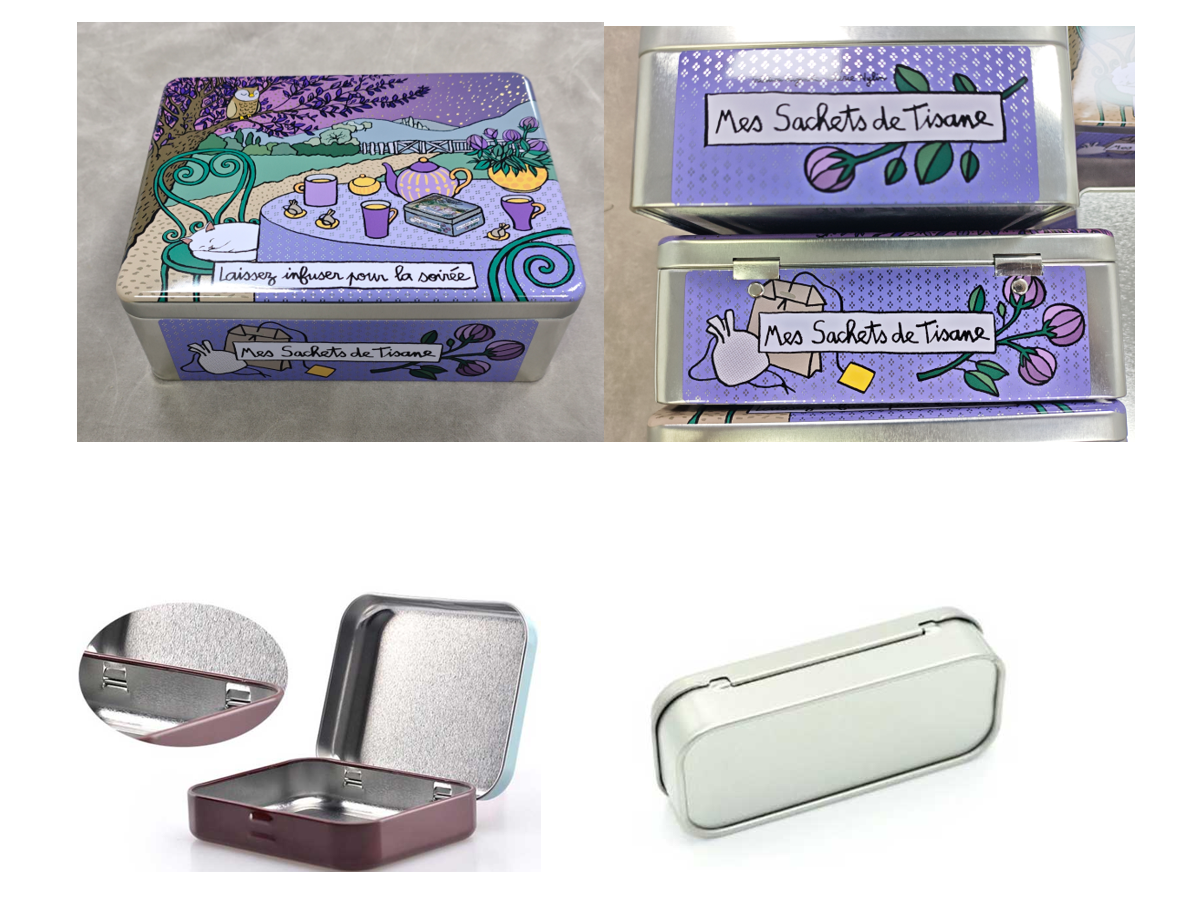
standard tin hinge+wire tin hinge+reviet tin hinge