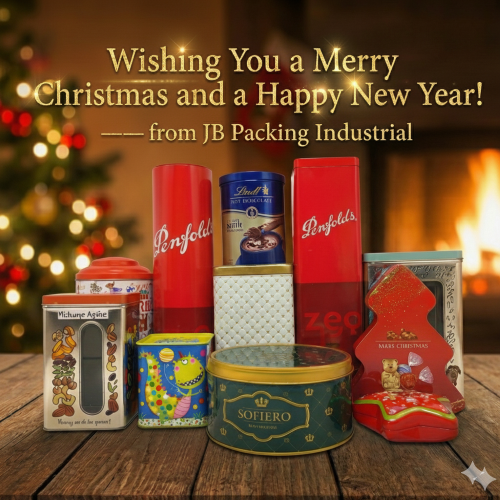
The Power of "Limited Edition": How Seasonal Tin Packaging Drives Impulse Buys
Walk down any retail aisle during the holidays, and you’ll see it: the power of the "Limited Edition." While standard paper boxes might get a festive print, Metal Packaging takes the seasonal experience to a whole different level.
For brand managers, seasonal packaging isn't just about looking festive; it’s a high-performance marketing tool designed to trigger two powerful psychological drivers: Scarcity and Collectibility.
At JB Packing, we’ve helped brands turn ordinary biscuits, chocolates, and cosmetics into "must-have" holiday gifts simply by changing the vessel. Here is how you can do it for your 2026 campaigns.
⚡ Seasonal Strategy: Why Tins Win
Higher Perceived Value: A tin box feels like a gift in itself, allowing for a premium price point.
Secondary Life: Unlike paper, tins are rarely thrown away. They stay in the consumer's home, keeping your brand visible all year.
Secondary Market: Rare, high-quality "Limited Edition" tins often become collector's items on platforms like eBay, extending your brand's reach for decades.
1. Creating the "FOMO" Effect (Fear Of Missing Out)
Limited-run packaging creates a sense of urgency. When a customer sees a beautifully embossed "Valentine’s Day 2026" or "Lunar New Year" tin, they know it won't be there next month. This urgency reduces "shelf hesitation" and drives impulse purchases.
Pro Tip: Use Serial Numbering or Year-Specific Designs to emphasize that once they are gone, they are gone forever.
2. Design for "After-Use" (The Ultimate Brand Recall)
The greatest advantage of metal over any other material is its durability. A seasonal tin often ends up as a storage container for sewing kits, stationery, or kitchen spices.
When you design your 2026 seasonal tin, think about its After-Use. A beautifully finished tin with [Quiet Luxury Textures] or intricate [3D Embossing] ensures your brand stays on the customer’s coffee table or kitchen shelf long after the product inside is consumed.
(Related: Check out our 2026 forecast on [Packaging Trends & Textures].)
3. Cost-Effective Seasonality: The "Lid-Only" Strategy
You don’t need to redesign your entire supply chain for a holiday. For many of our clients, we suggest a Hybrid Seasonal Approach:
Keep the Tin Body a standard, brand-consistent color (e.g., gold or matte black).
Change only the Lid Design for the specific holiday.
This allows you to leverage your [Existing Molds] while still giving the consumer a fresh, limited-edition experience.
💡 FAQ: Seasonal & Limited Edition Tins
Q: How far in advance should I order seasonal packaging?
A: For major holidays, we recommend starting the design and sampling process 6 months in advance. This accounts for production, sea-shipping, and getting the product onto retail shelves.
Q: Can I do a small run for a "Limited Edition" launch?
A: Yes! By using standard shapes and focusing on unique lid printing, you can keep MOQs manageable. Read our [Startup Guide to Low MOQ Tins] for more tips on small-batch sourcing.
Q: Does seasonal packaging really justify a higher price?
A: Data shows that consumers are willing to pay a 15-25% premium for products in high-quality "gift-ready" metal packaging compared to standard paper or plastic.
The Bottom Line: Turn Your Product into a Gift
In 2026, don’t just sell a product—sell a memory. Seasonal tin packaging transforms a routine purchase into a special event.
Planning your 2026 holiday lineup? [Contact JB Packing] today to see our seasonal mold library.